
Indigenous-Led Stewardship
My work in Indigenous-led stewardship asks how ecological monitoring, community knowledge, and long-term relationships with place can support healthy landscapes and accountable woodland care.
How can monitoring support woodland care?
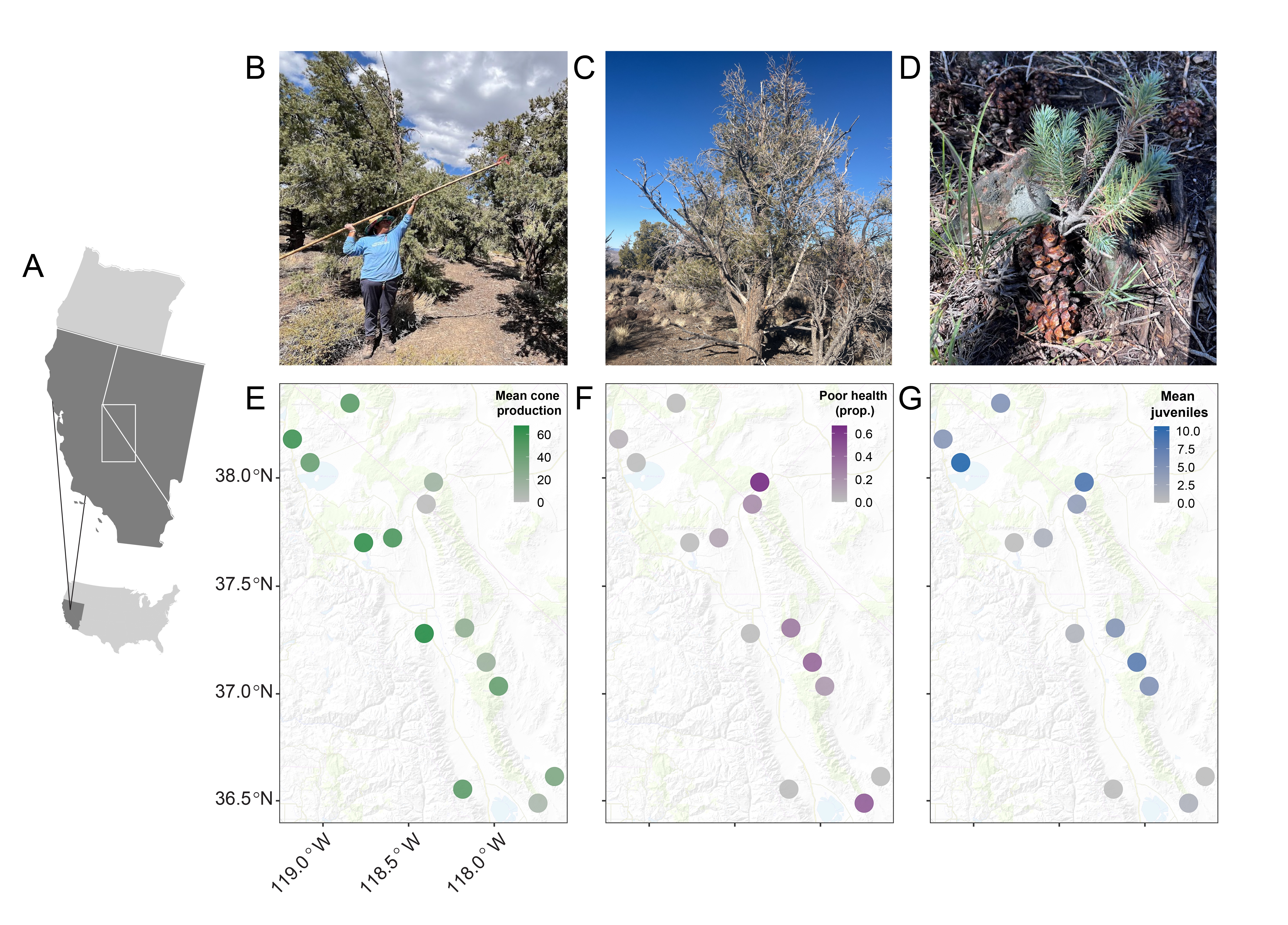
In pinyon–juniper woodlands of the Eastern Sierra Nevada and Great Basin, I work with Tribal Nations, students, local organizations, and land managers to monitor woodland health, cone production, regeneration, and landscape change. This work centers Tribal priorities and supports monitoring approaches that are useful for adapative stewardship.
What does it mean to care for a landscape?
Healthy landscapes depend on ecological processes and the long-term relationships between people and place. My community-engaged research examines care as both an ecological and social process: something built through repeated presence, knowledge, responsibility, and the capacity to respond to environmental change.
How can Indigenous-led stewardship support healthier landscapes?
This work explores how Indigenous knowledge, community-based monitoring, and collaborative research can support long-term woodland care. It also asks how institutions can better support Indigenous leadership, data sovereignty, and stewardship practices that have sustained relationships with pinyon–juniper woodlands over generations.
Together, this research contributes to broader conversations about co-stewardship, environmental responsibility, and the role of ecological knowledge in supporting healthier forests and landscapes.